
Introduction
Laparoscopic hernia repair is a modern, minimally invasive surgery for hernia treatment. This advanced approach uses small cuts and a camera to fix hernias. Because of this, many people recover faster and feel less pain. In recent years, more doctors recommend laparoscopic hernia repair over traditional open surgery. As a result, patients often return to daily life sooner. In this blog, you will learn about this modern hernia treatment, its benefits, and what to expect.
What is Laparoscopic Hernia Repair?
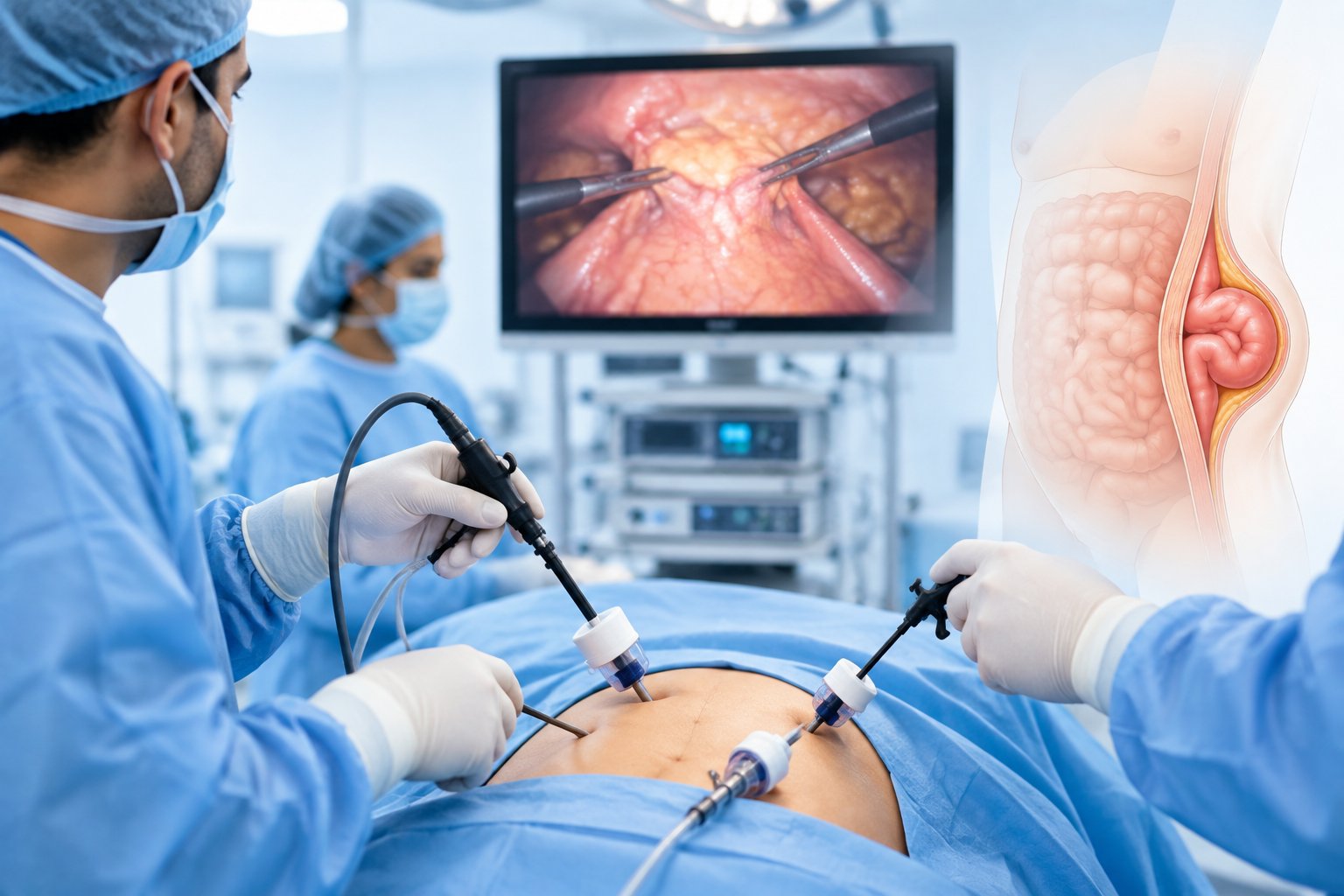
A hernia happens when an organ or tissue pushes through a weak spot in the muscle. Laparoscopic hernia repair is a type of minimally invasive surgery. During this procedure, the surgeon makes a few small cuts in the belly. Then, a thin tube with a camera, called a laparoscope, is inserted. This camera lets the doctor see inside your body on a screen. Next, special tools are used to fix the hernia and place a mesh for support. Because the cuts are small, healing is often quicker than with open surgery.
Symptoms and Causes of Hernias
Hernias can cause different symptoms. However, some people may not notice any signs at first. Common symptoms include:
There are several causes of hernias. For example, weak muscles, heavy lifting, or straining during bowel movements can lead to hernias. In addition, being overweight, pregnancy, or chronic coughing may increase your risk. Sometimes, hernias are present at birth due to weak muscles.
How Laparoscopic Hernia Repair Works
First, the surgeon gives you anesthesia so you do not feel pain. Next, small cuts are made in the belly. Through these cuts, the laparoscope and tools are inserted. The surgeon watches a screen to guide the repair. Then, the hernia is gently pushed back into place. A mesh is placed to strengthen the muscle wall. Finally, the small cuts are closed with stitches or glue. Because the cuts are tiny, scars are usually small and heal well.
Benefits Compared to Traditional Surgery
Laparoscopic hernia repair offers many advantages over open surgery. For instance, it uses smaller cuts, which means:
According to the World Health Organization and recent studies, minimally invasive hernia repair is safe and effective for many patients. However, not everyone is a candidate. Your doctor will help you decide the best option.
Risks and Considerations
Although laparoscopic hernia repair is safe, every surgery has risks. For example, you may have:
But, these problems are rare. Before surgery, your doctor will explain all risks and answer your questions. It is important to follow your surgeon’s advice for the best results.
Recovery and Aftercare Tips
After laparoscopic hernia repair, most people go home the same day. Even so, you should rest and avoid heavy lifting for a few weeks. To help your recovery:
If you notice any problems, call your doctor right away. Because recovery is usually quick, many people return to work or school within one to two weeks.
Prevention and Lifestyle Guidance
While not all hernias can be prevented, you can lower your risk. For example, you can:
In addition, regular exercise can help keep your muscles strong. If you have a family history of hernias, talk to your doctor about your risk.
Conclusion
Laparoscopic hernia repair is a modern, safe, and effective way to treat hernias. Because it uses small cuts, recovery is often faster and less painful. However, every patient is different. Consult a qualified surgeon at SV Multi Specility Hospital to discuss if laparoscopic hernia repair is right for you.